Research Areas
Current research underway at the institute is in the areas of learning, knowledge, knowledge
management, knowledge mobilization, ICAS (the intelligent complex adaptive system), ICAT
(the intelligent complex adaptive team), ICAP (the intelligent complex adaptive professional).
Each link will take you to a larger treatment of the subject. Interrelated areas include change,
complexity, decision-making, knowledge management, leadership, consciousness and
meaning. (See the Publications section of this website.)
MQI Principals—Dr. Alex Bennet and Dr. David Bennet—interact with individuals, teams and
organizations around the world in focused collaborative research efforts, then share what has
been learned in conferences and workshops. They are always interested in new partnering
relationships. Call Dr. David Bennet at 304-799-7267 or email Dr. Alex Bennet at
alex@mountainquestinstitute.com
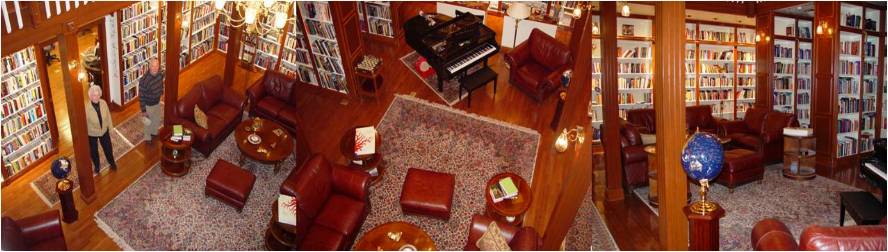
The MQI Research Library contains 26,000 non-fiction books and is an affiliate of the State
of West Virginia Library System. See About the Library.
Learning
Recognizing that adults want to learn but do not like to be taught, the Institute is developing a
new theory and model of adult learning that provides individuals with an understanding of how
the mind learns, an appreciation of their unlimited potential for learning and recognition that
they can—and should—manage their own learning. the model is based upon the latest neuro-scientific, psychological and educational research.
Based upon these areas, the model is best described as inside-out learning. We begin with
the unconscious and dreaming, consider the pattern-forming mind, and move to the self,
consciousness and autopoiesis. The model is a conjunction of David Kolb's experiential learning,
James Zull's physiological overlay and the Bennets 13 Neuroscientific areas that enhance
learning. The model also considers Karl Popper's three worlds (the physical world, subjective
reality, and objective knowledge) and the limits of science to complete the loop of learning
from the unconscious to the external world and back to the unconscious.
Knowledge
We define knowledge as the capacity (potential or actual) to take effective action. Such
capacity requires information, sense-making, understanding, context, theories, rules, insights,
intuition and judgment and the ability to anticipate the outcome of ones actions. Over the past
ten years the Bennets have insight-by-insight been building a new epistemology of knowledge.
We share a large part of this body of work here on the website.
Knowledge Management
Knowledge Management (KM) is the systematic nurturing of an organization to enable it to
make maximum use of knowledge in achieving its purpose. Knowledge Management gives
visibility and focus to an awareness and appreciation of knowledge as a strategic asset in
organizations. To discover the nature of this field, research was directed at uncovering those
aspects of the field that excited passion in its thought leaders. The research methodology,
results and discussion of results are available for download.
Knowledge Mobilization
The leadership shown by the government of Canada in creating and implementing the
Knowledge Impact on Society (KIS) program designed to move knowledge from the researcher
to the citizens stimulated our research focus in this area. As we move into the future the
importance of optimizing the applications of research for the welfare of all citizens grows
exponentially. The Canadian approach of knowledge mobilization serves as a model for future
research, where knowledge mobilization complements—and becomes as important as—the
research itself. The work was published as Knowledge Mobilization in the Social Sciences and
Humanities: Moving from Research to Action (MQIPress, 2007). Also available as an eBook in
Spring 2013.
ICAS (The Intelligent
Complex Adaptive System)
A new theory of the firm, the Intelligent Complex Adaptive System (ICAS) consists of
emergent characteristics, structures, processes and competencies that, when integrated and
implemented, significantly contribute to organizational success. The ICAS concept is based on
systems and complexity thinking, knowledge management, and biological metaphors. It
recognizes the critical significance of networks and relationships in providing the agility,
openness and flexibility needed to perceive, understand and respond to a dynamic, uncertain
and complex environment. This work was published as Organizational Survival in the New
World: The Intelligent Complex Adaptive System (Elsevier, 2004). Also available as an eBook.
ICAT (The
Intelligent Complex Adaptive Team)
The world is changing. While there has been much work published on teams over the past
decade, there is little work considering teams as organic or complex adaptive systems and a
team's capacity to leverage knowledge and achieve high performance under conditions of
change, uncertainty, complexity and anxiety. building on autopoiesis, complexity theory and
knowledge management, this research explores the foundations of effective team performance,
offering many new ways to understand teams and new techniques for handling difficult
problems and situations. The intent of this research is to develop a roadmap for creating a
team that can be successful in a turbulent future ... a team for all seasons.
ICAP (The
Intelligent Complex Adaptive Professional)
The CUCA (change, uncertainty, complexity and anxiety) environment has placed great
pressure on professionals in all fields. A common, but unproven, saying is that within five years
after graduation at least ½ of what college students learned in school is obsolete. Whether true
or not it is very clear that as our economy and technology speed up, information explodes and
the knowledge required to make good decisions is constantly changing. This means that
professionals and knowledge workers in many fields must become continuous learners just to
keep up.
From the personal viewpoint, each worker will have to be able to decide on their own what
they need (want?) to learn. As professionals move up the ladder, they will need to expand their
competencies to include new ways of seeing, thinking, feeling and behaving—this, perhaps in
addition to maintaining their specific professional expertise. Other competencies would include
relationship network management, critical thinking, information literacy, risk management,
etc. New leadership and management skills will help deal with the new reality arising from the
age of complexity. Personal growth and a better understanding of the self and others will
enhance career success and lifelong satisfaction.
In summary, the knowledge worker of the future, to survive, grow and contribute, will have
to be an intelligent, complex adaptive professional (ICAP). That is, they must be prepared,
think through situations, adapt several perspectives and work with others to achieve goals and
objectives. Complexity will be found in their creativity, maturity of perception and ability to
draw from their own and others experience to find many options for actions. Adaptability will
come from continuous learning and a belief that their knowledge is never absolute and their
thinking must “go with the flow” of the environment and their own objectives. They will see
themselves as “one system” embedded within, and coevolving with, many larger systems.
Spirituality
We are more than our physical body. We believe in the holistic human being, that is, you
cannot leave your feelings and beliefs at the door, they are always with you, affecting your
decisions and actions whether you are aware of it or not. Further, we are beginning to
understand our very real connections with each other, and to recognize that we are vibrational
beings who bring into our sphere of concern that which has similar vibration. And what we
think and feel actually affects the structure of our brain, which in turn affects our future
thinking and feeling. In other words, our minds are entangled with all aspects of our decisions
and actions and with our internal and external landscapes. In the midst of this entanglement,
who is the authentic you? While exploring these issues here at Mountain Quest, the Universe
caught our attention and we began to explore the "Myst".
The Golden Age of Humanity
These are exciting times to be alive. There is an "energy in the air" that is mixing up, agitating
and cleansing our Earth (GAIA) and all of the living forms that call her home. As a Humanity
we now have opportunities to move forward in new and amazing ways, becoming more
interactive with, and creating, our reality. What will our future look like? This exploration is
just beginning.